Moving automotive stock into a fulfilment warehouse starts before the first pallet leaves your site. The receiving team needs to know what is coming, how each item is identified, how much space and handling it needs and which record should follow it into storage. A clear handover reduces avoidable questions and gives both businesses a shared starting point.
This checklist explains the information Prime asks suppliers to prepare. It does not confirm that every product is suitable or replace the written receiving and service arrangement for your stock.
1. Build a stock file that identifies each item
Give each product a stable SKU and keep that reference on the stock file, the product or its packaging and the shipment paperwork. For each line, provide the clearest information available:
- Internal SKU and manufacturer or brand
- Manufacturer part number, OEM reference and EAN/GTIN where available
- Plain-language product description and condition
- Quantity being sent
- Approximate item dimensions and weight
- Any fragile, hazardous, high-value or specialist-handling characteristics
Do not combine different products under one convenient description. A mixed shipment still needs line-level identification so the received quantity and storage record can be checked against the physical stock.
2. Describe the physical stock before it is priced
Automotive parts vary from small boxed components to heavy assemblies, body panels and palletised items. Share representative dimensions, weights and photographs before stock is moved. Prime confirms the applicable receiving, storage and handling classification for the actual items; the supplier should not assume that every product in one pallet has the same rate.
A mixed pallet is received as individual parts, not as one single palletised component. Courier or third-party freight is separate from receiving, storage and pick-and-pack charges. Review the current fulfilment rates and obtain confirmation for specialist stock before delivery.
3. Connect the physical item to its record
Use a readable product or carton label showing the agreed SKU. Where a pallet contains several lines, provide a packing list that shows which quantities are in each carton or layer. Avoid labels that cover the manufacturer’s identity, safety information or a part number needed for verification.
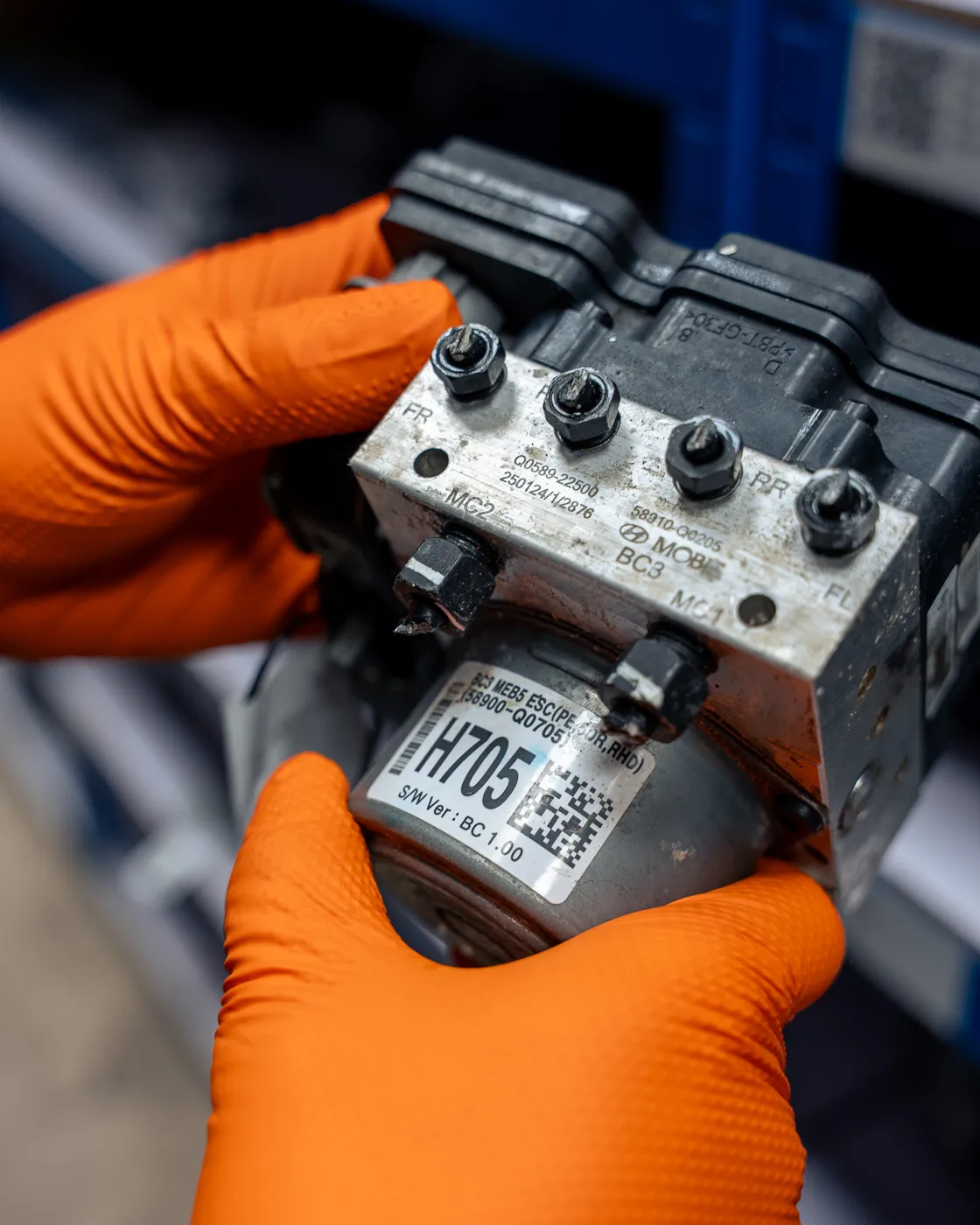


These photographs show Prime’s working operation in Uddingston. The exact labelling method, any QR setup and the information recorded are confirmed for the agreed service.
4. Record condition and listing information separately
Receiving stock is not the same as accepting a product for sale. Keep condition, photographs, compatibility data and included accessories clear at line level. If photography, checks or listing support are required, include them in the service discussion; they are not automatically included with storage or pick-and-pack.
For new or genuine OEM stock, retain supporting product and purchase records. For used parts, record relevant condition information and donor-vehicle context where available. Do not use an asking price or a similar-looking part as proof of identity, compatibility or completed demand.
5. Agree the arrival before sending stock
Confirm the delivery address, proposed date, number of cartons or pallets, carrier details and any equipment needed to unload the shipment. Overseas suppliers should also confirm the agreed importer, customs, tax and transport responsibilities before dispatching goods to the UK.
Do not send stock until Prime has confirmed suitability and the receiving arrangement. An agreed arrival plan does not guarantee immediate listings or acceptance of every item; discrepancies and unsuitable or damaged stock need an agreed review route.
6. Plan how quantities and exceptions will be checked
Agree which stock file is the receiving reference and who should answer questions. After check-in, compare received quantities and identities with that reference. The written arrangement should cover how the parties handle unidentified items, quantity differences, visible transit damage and stock that needs further information before it can enter the normal workflow.
Keep a dated copy of the file supplied with each delivery. If the same SKU is replenished later, make the new quantity and shipment reference clear rather than replacing the history of the earlier receipt.
7. Prepare the order and dispatch rules
Before orders begin, confirm the required order information, dispatch cut-offs where applicable, packaging expectations and supported carriers or freight routes. Heavy, oversized, fragile and regulated products may need separate transport or handling confirmation.
Returns administration is separately charged and the responsibilities for communication, inspection, postage and disposition should be stated in the agreement. This guide does not create a new returns policy or service guarantee.
8. Start with a representative handover
For a new range, consider an agreed first shipment that represents the real catalogue: a straightforward boxed part, a bulky or heavy item, a line with several units and any product needing special handling. Check identification, receiving, storage location, picking information and dispatch data before expanding the volume.
A successful handover confirms that the process works for the tested stock. It does not guarantee order volumes, delivery times for every route or product acceptance outside the agreed range.
Charges and service scope
Prime Fulfilment has no M2 subscription, setup fee or fulfilment commission. Receiving, storage, pick-and-pack, returns administration, heavy handling and freight are charged according to the services used. Marketplace, software and other sales-channel charges are separate. Check the Fulfilment page, current prices and your written proposal before sending stock.
Your questions, answered
What information helps Prime prepare a fulfilment quote?
Share the product categories, approximate quantities, dimensions and weights, current stock location, expected monthly orders, destination markets and any specialist handling requirements.
Can a mixed pallet be received as one palletised component?
No. A mixed pallet is received as individual parts. Prime confirms stock classification and applicable receiving charges before or at check-in.
Do Marketplace sellers have to use Prime Fulfilment?
No. Marketplace sellers can hold and dispatch their own stock. Fulfilment is optional and separately charged.